The world's greatest desert hotels share a common quality: they do not impose upon the landscape but emerge from it. From the Utah canyonlands to the Saudi desert, these properties have transformed the world's most extreme environments into extraordinary destinations.
Why the desert has become the world's most exciting hotel destination
A decade ago, the idea of a luxury hotel in the desert was a contradiction in terms. Today, the world's most ambitious hotel projects are being built in the most extreme landscapes on earth — from the sandstone canyons of Utah to the volcanic dunes of AlUla, from the Moroccan Atlas foothills to the Namibian wilderness. What these properties share is a philosophy: that the desert's apparent emptiness is in fact its greatest luxury, and that the experience of space, silence, and elemental beauty is the most valuable thing a hotel can offer.
Amangiri — A modernist masterpiece in the Utah desert
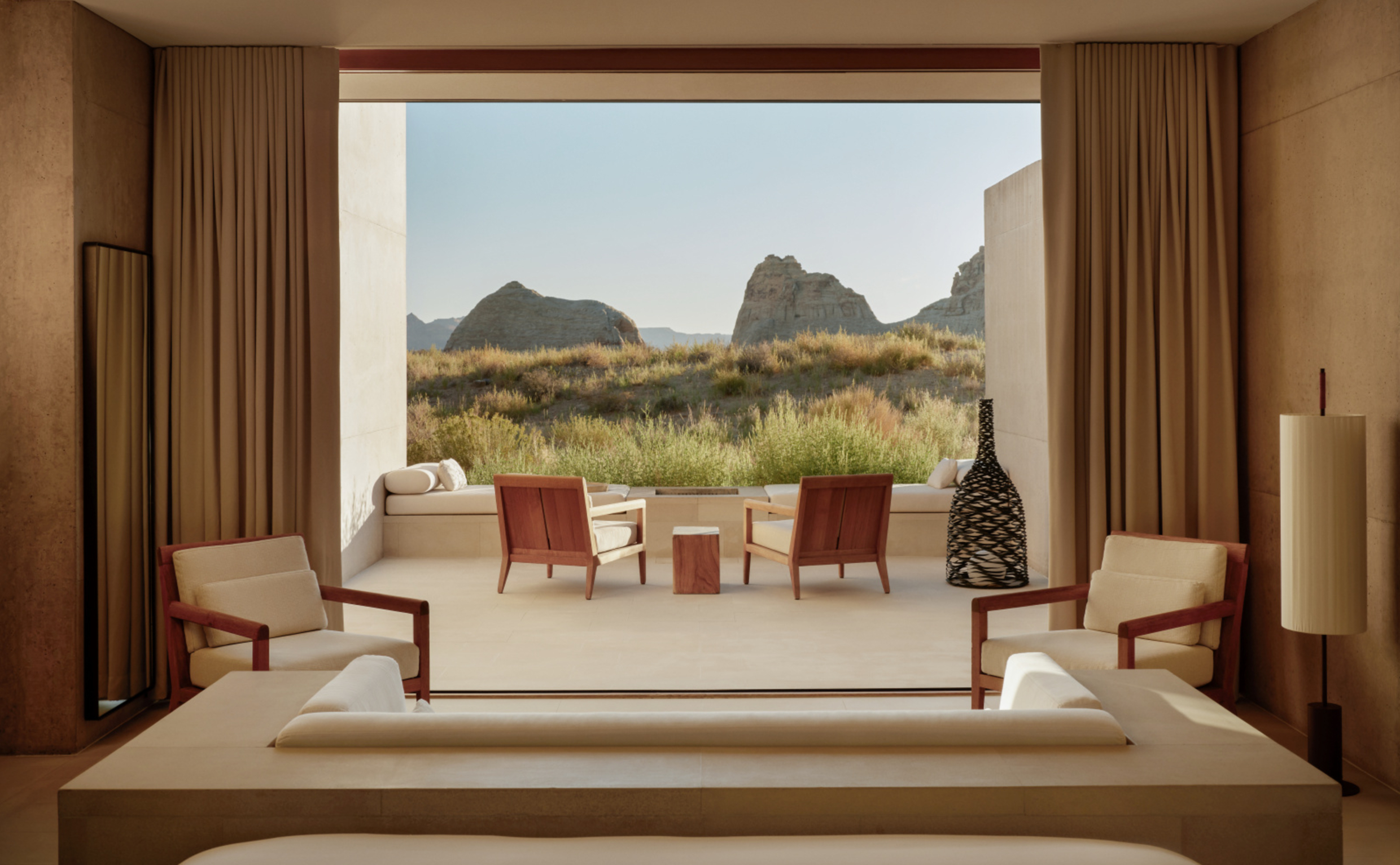
Amangiri is the most architecturally significant hotel in the Americas — a building that has achieved the near-impossible feat of making the desert more beautiful.
Tucked into the canyon country of southern Utah, where the Colorado Plateau creates a landscape of extraordinary drama — slot canyons, sandstone buttes, and the distant profile of Monument Valley — Amangiri is a masterwork of desert architecture. The resort's concrete pavilions emerge from the sandstone as if they always belonged there, and the pool — which curves around a massive rock formation — is perhaps the most photographed hotel pool in the world. The 34 suites are designed with a minimalism that lets the landscape dominate: floor-to-ceiling windows, natural materials, and a palette drawn from the surrounding rock. Activities range from guided canyon hikes and helicopter tours to hot air balloon flights over Monument Valley.
Powered by Booking.com
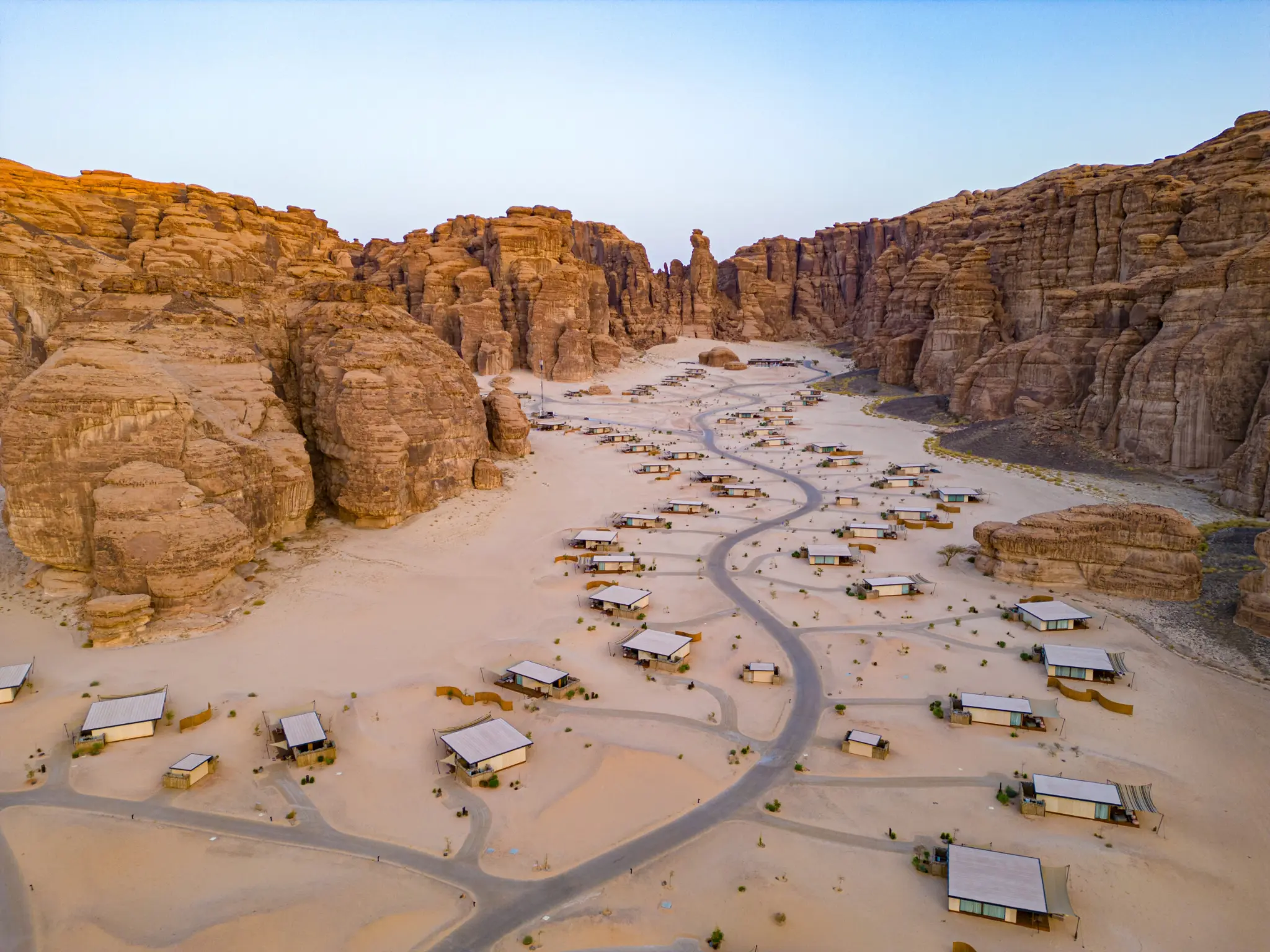
AZULIK AlUla — An eco-vision in the Saudi desert
AZULIK AlUla is the most visionary hotel project of the decade — a sustainable eco-resort that has brought Mexico's most radical hospitality philosophy to the ancient landscape of Saudi Arabia.
AZULIK — the Mexican brand that created the world's most photographed treehouse hotel in Tulum — has brought its radical eco-philosophy to AlUla, the ancient oasis city in north-west Saudi Arabia that is home to Hegra, the country's first UNESCO World Heritage Site. The resort's organic structures, built from natural materials without a single nail or screw, rise from the desert landscape like geological formations. Each villa is a private sanctuary, with outdoor baths, open-air sleeping areas, and views over the rose-coloured sandstone formations that have made AlUla one of the world's most extraordinary landscapes. The proximity to Hegra — the Nabataean city carved into the rock — gives the stay a cultural depth that few desert hotels can match.
Powered by Booking.com
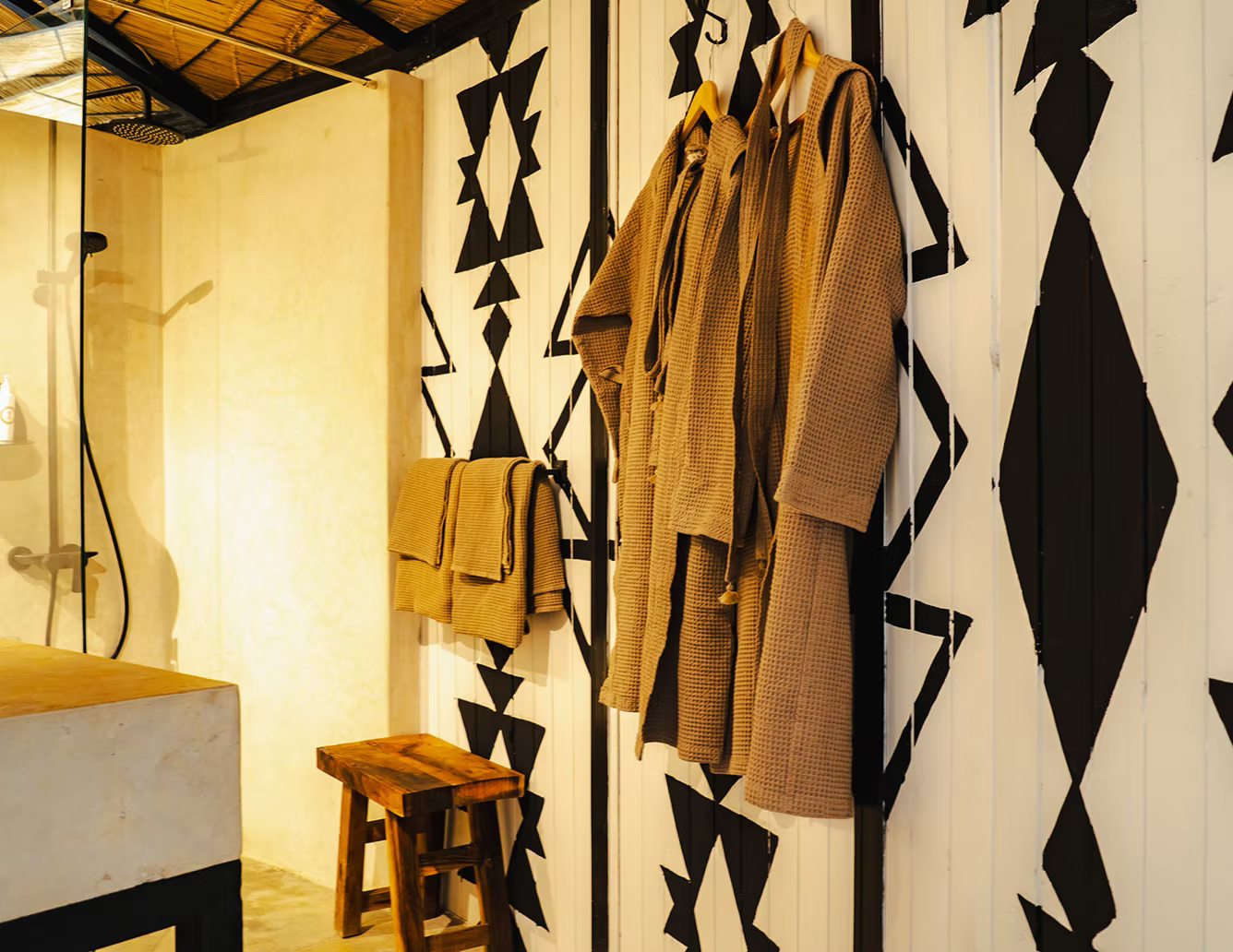
Be Agafay — Moroccan desert luxury above Marrakech
Be Agafay is the most refined desert camp in North Africa — a 45-minute drive from Marrakech that feels like another world entirely.
The Agafay Desert — a rocky plateau of ancient limestone 45 minutes south of Marrakech, with the Atlas Mountains as a backdrop — is one of Morocco's most dramatic landscapes. Be Agafay has established itself as the most refined camp in the region, with 30 bungalows and tented suites that combine Moroccan craftsmanship with contemporary luxury. The infinity pool, overlooking the desert with the Atlas peaks in the distance, is one of the most spectacular in Africa. The food — a blend of Moroccan and Mediterranean influences — is exceptional, and the camel treks, quad bike excursions, and stargazing sessions make the most of the extraordinary setting.
Powered by Booking.com
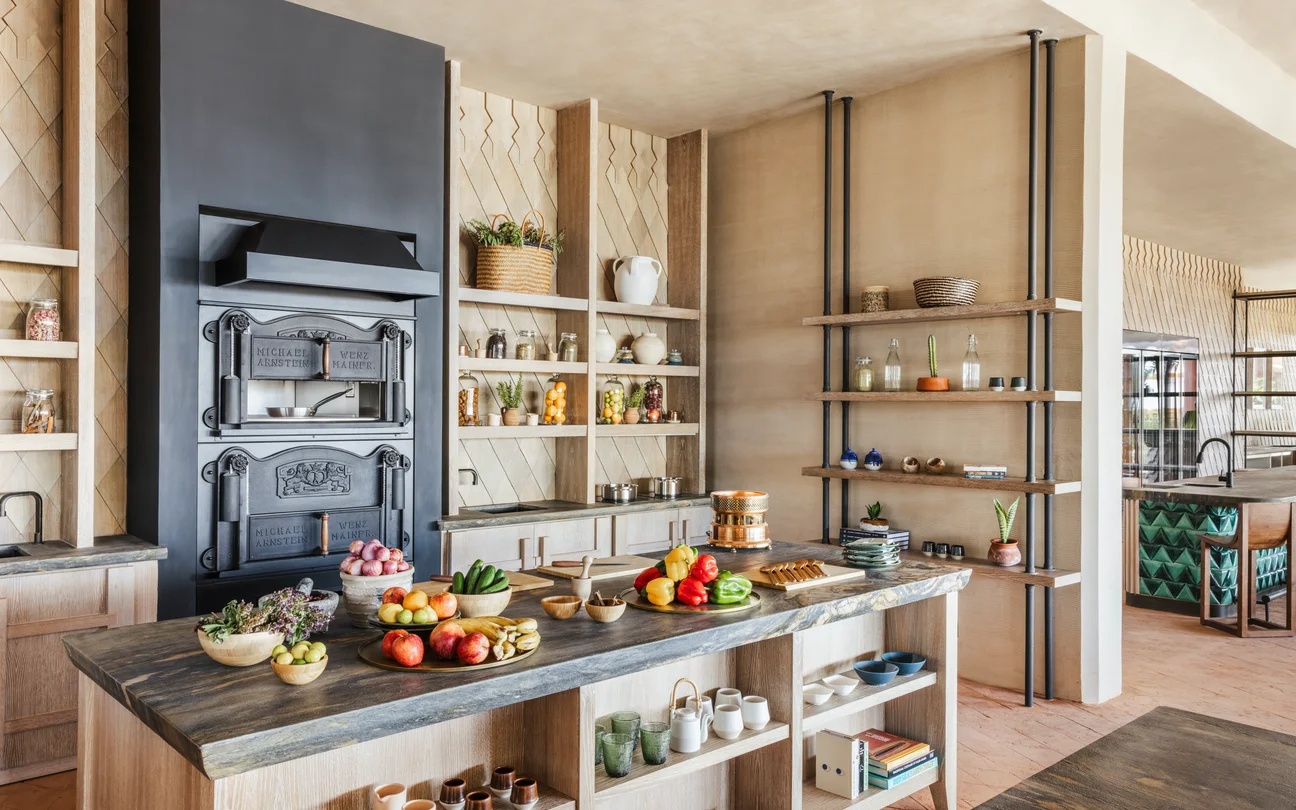
Six Senses Southern Dunes — A new standard for Saudi desert luxury
Six Senses Southern Dunes has brought the brand's signature wellness philosophy to one of the world's most extraordinary landscapes — and the result is a desert hotel of rare depth.
Six Senses Southern Dunes occupies a dramatic site in AlUla — the ancient oasis city in north-west Saudi Arabia that has emerged as one of the world's most exciting new destinations. The resort's 76 pool villas are designed to blend into the rose-coloured sandstone landscape, with private pools, outdoor baths, and terraces that frame the desert and the distant mountains. The Six Senses Spa draws on the brand's expertise in holistic wellness, with treatments that incorporate local desert botanicals and ancient healing traditions. The proximity to Hegra — the Nabataean city carved into the rock — and the extraordinary stargazing in the unpolluted desert sky give the stay a cultural and natural depth that few hotels anywhere can match.
Powered by Booking.com
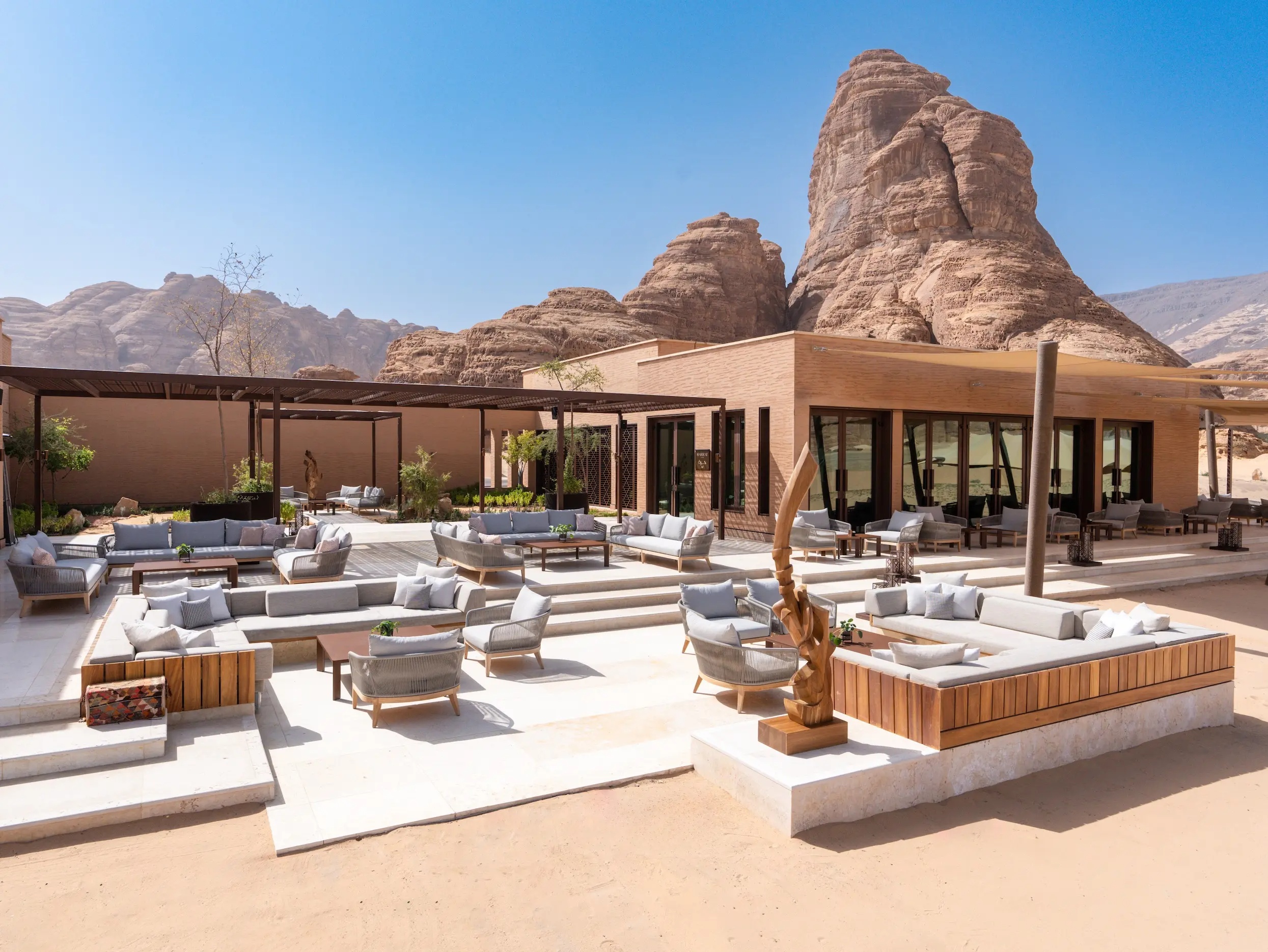
Banyan Tree AlUla — A desert sanctuary in the ancient Hejaz
Banyan Tree AlUla is the most refined desert hotel in Saudi Arabia — a property where 47 pool villas blend seamlessly into the ancient Hejaz landscape, with access to the extraordinary archaeological sites of AlUla.
In the ancient Hejaz region of north-west Saudi Arabia, Banyan Tree AlUla occupies a landscape of extraordinary geological and archaeological significance. The hotel's 47 pool villas are designed to disappear into the desert — low-slung, earth-toned, and oriented to maximise views of the surrounding sandstone formations. The proximity to Hegra (the first UNESCO World Heritage Site in Saudi Arabia), the ancient city of AlUla, and the extraordinary Elephant Rock makes Banyan Tree AlUla a base for cultural exploration that has no equivalent in the region. The Saffron restaurant serves Thai cuisine in a desert setting of surreal beauty, while the Harrat restaurant celebrates local Hejazi flavours and traditions.
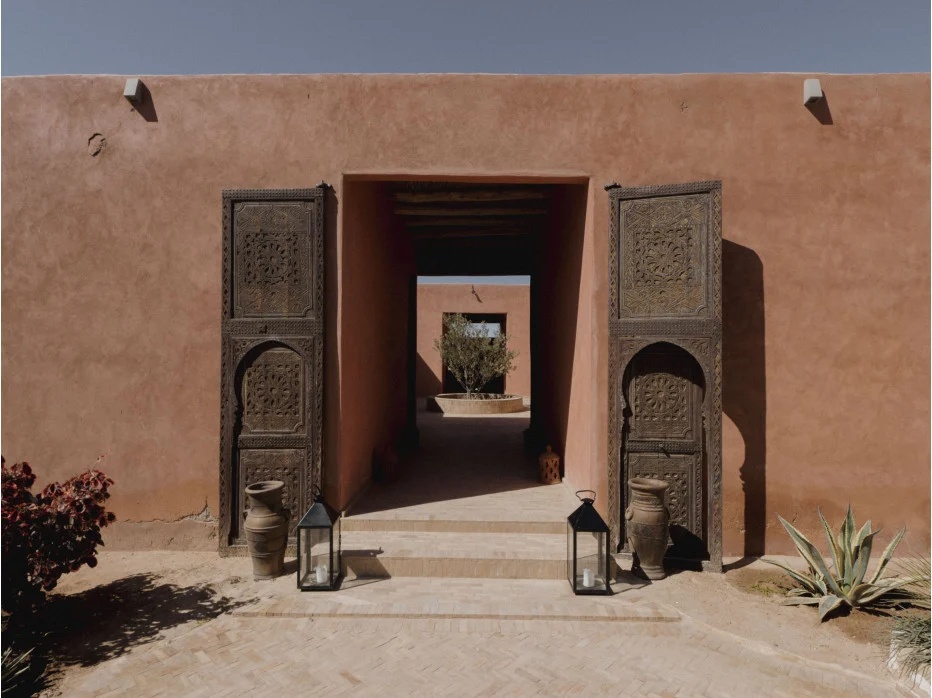
Caravan by Habitas Dakhla — Where the Sahara meets the Atlantic
Caravan by Habitas Dakhla occupies one of the most extraordinary geographical positions on earth — where the Sahara desert meets the Atlantic Ocean in a landscape of dunes, lagoons, and constant wind.
Dakhla, on the Atlantic coast of Western Sahara, is where the Sahara desert meets the sea in a landscape of extraordinary drama. Caravan by Habitas has built a camp of desert riads at this confluence — a property that combines the aesthetic sensibility of the Habitas brand with the raw elemental beauty of one of the world's most remote destinations. The lagoon that separates the peninsula from the mainland is one of the world's premier kitesurfing destinations, and the hotel's location gives guests direct access to both the desert interior and the Atlantic coast. The combination of extraordinary landscape, genuine adventure, and Habitas's characteristic warmth makes this one of the most memorable desert stays in Africa.
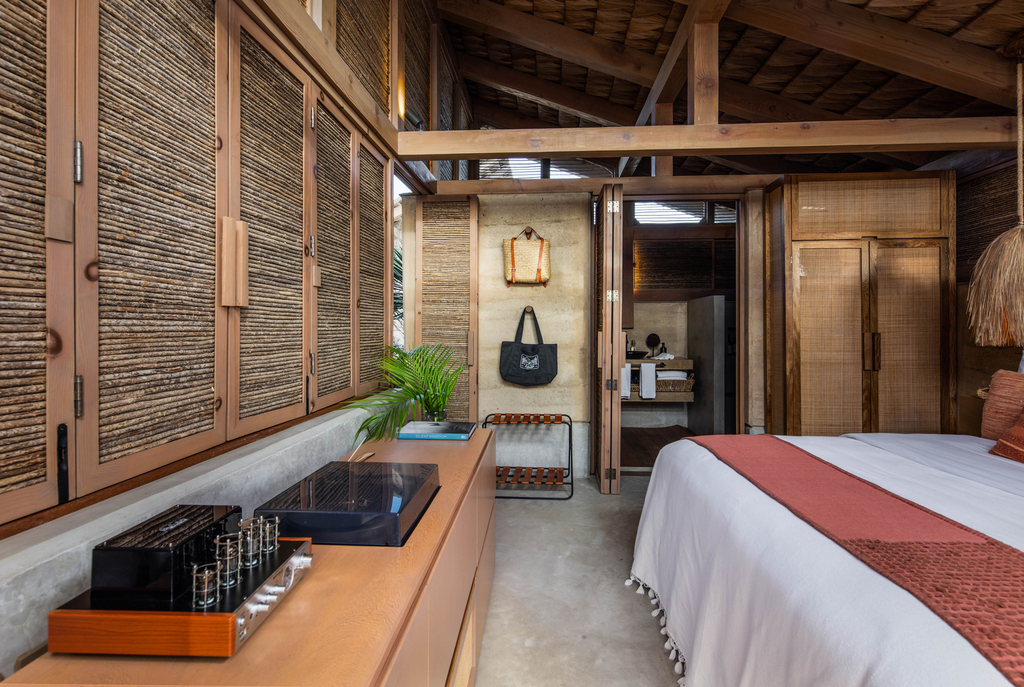
El Perdido Desert Dream — A private desert villa in the Almerian badlands
El Perdido Desert Dream is Europe's most extraordinary desert escape — private villas in the Tabernas badlands of Almeria, the only true desert in Europe, where the landscape looks like the American Southwest.
The Tabernas Desert in Almeria is Europe's only true desert — a landscape of eroded badlands, dry riverbeds, and spaghetti-western film sets that has more in common with New Mexico than with the rest of Spain. El Perdido Desert Dream has built a collection of private villas in this extraordinary landscape, offering total seclusion in a setting that feels entirely unlike anything else in Europe. The villas are designed with a desert modernism that references both the local landscape and the American Southwest, and the combination of private pools, stargazing terraces, and absolute silence creates an experience of rare intensity. The proximity to the Cabo de Gata natural park and the Mediterranean coast adds a further dimension to what is already one of Europe's most distinctive hotel experiences.
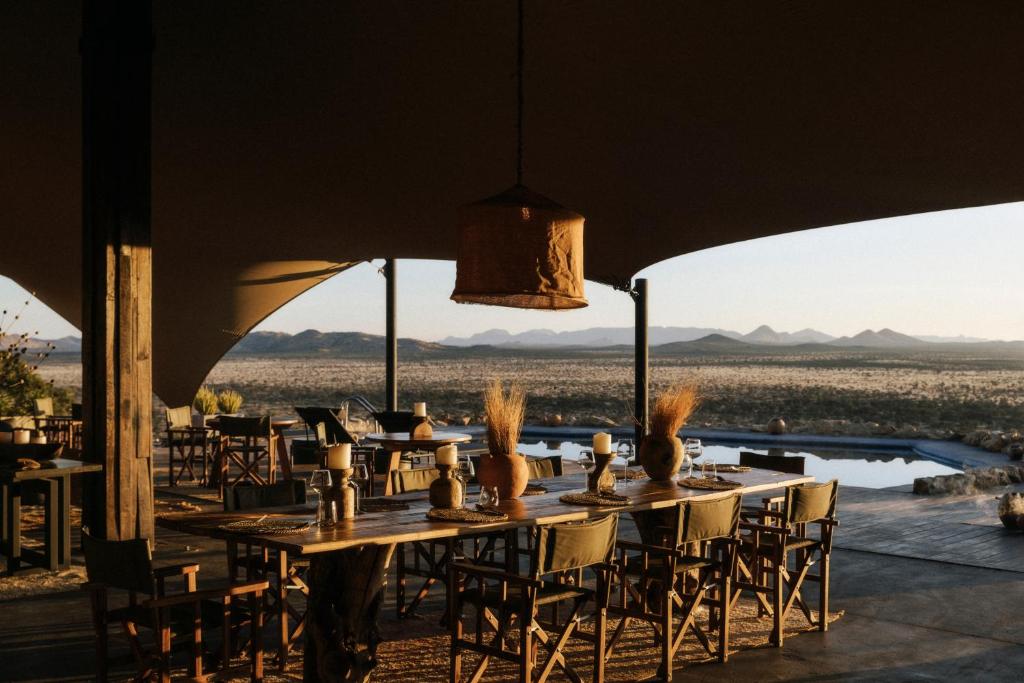
Habitas Namibia — A savanna sanctuary in the Namib
Habitas Namibia is the most beautifully designed camp in one of Africa's most extraordinary landscapes — a property that combines the Habitas brand's commitment to community and sustainability with the raw drama of the Namib.
Namibia's landscape is unlike anywhere else on earth: ancient orange dunes, vast salt pans, and a desert that has been continuously arid for 55 million years. Habitas Namibia places guests at the heart of this extraordinary environment, in a camp of savanna rooms designed with the brand's characteristic warmth and attention to detail. The open-air dining pavilion, the community-focused programming, and the access to some of Africa's most dramatic landscapes — including Sossusvlei, Deadvlei, and the Skeleton Coast — make this one of the most compelling desert stays on the continent. The Habitas approach — which prioritises genuine connection with local communities and ecosystems — gives the stay a depth that purely luxury-focused camps cannot match.
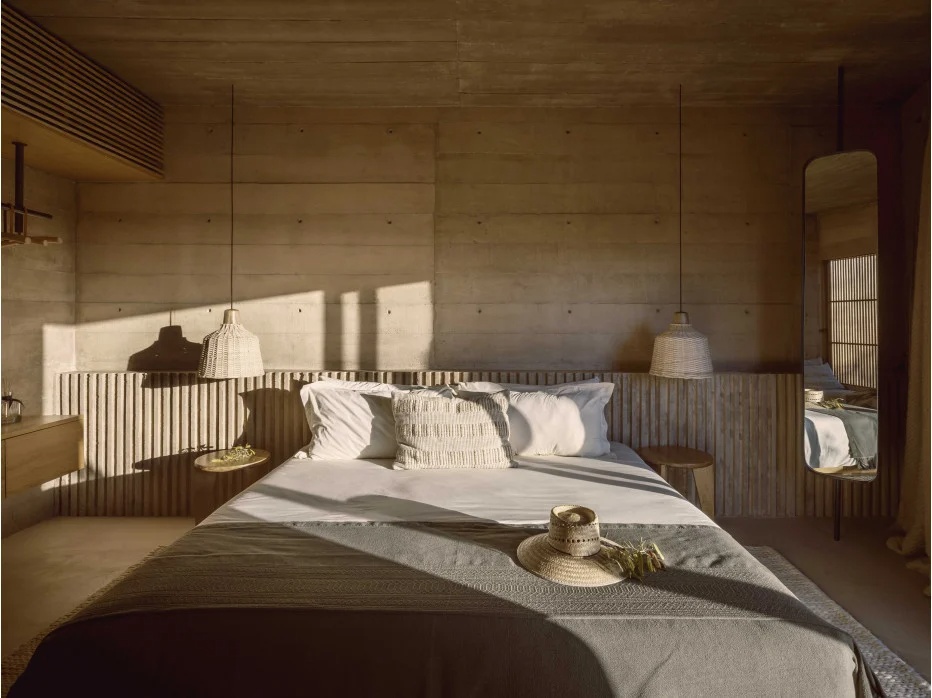
Paradero Todos Santos — A desert-meets-ocean sanctuary in Baja
Paradero Todos Santos is the most compelling boutique hotel in Baja California — a property where the Sonoran desert meets the Pacific Ocean in a landscape of extraordinary beauty, and where the architecture responds to both with equal intelligence.
In the UNESCO World Heritage town of Todos Santos on the Pacific coast of Baja California Sur, Paradero occupies a hillside position with views of both the Pacific Ocean and the Sierra de la Laguna mountains. The hotel's architecture — a series of desert-modern suites built from local stone and reclaimed wood — responds to the extraordinary landscape with genuine sensitivity. The sky suites, perched above the cacti, offer some of the most dramatic views in Mexico. The spa, the farm-to-table restaurant, and the hotel's proximity to some of the finest surf breaks in Baja make Paradero a complete destination for those who want both desert solitude and Pacific adventure.
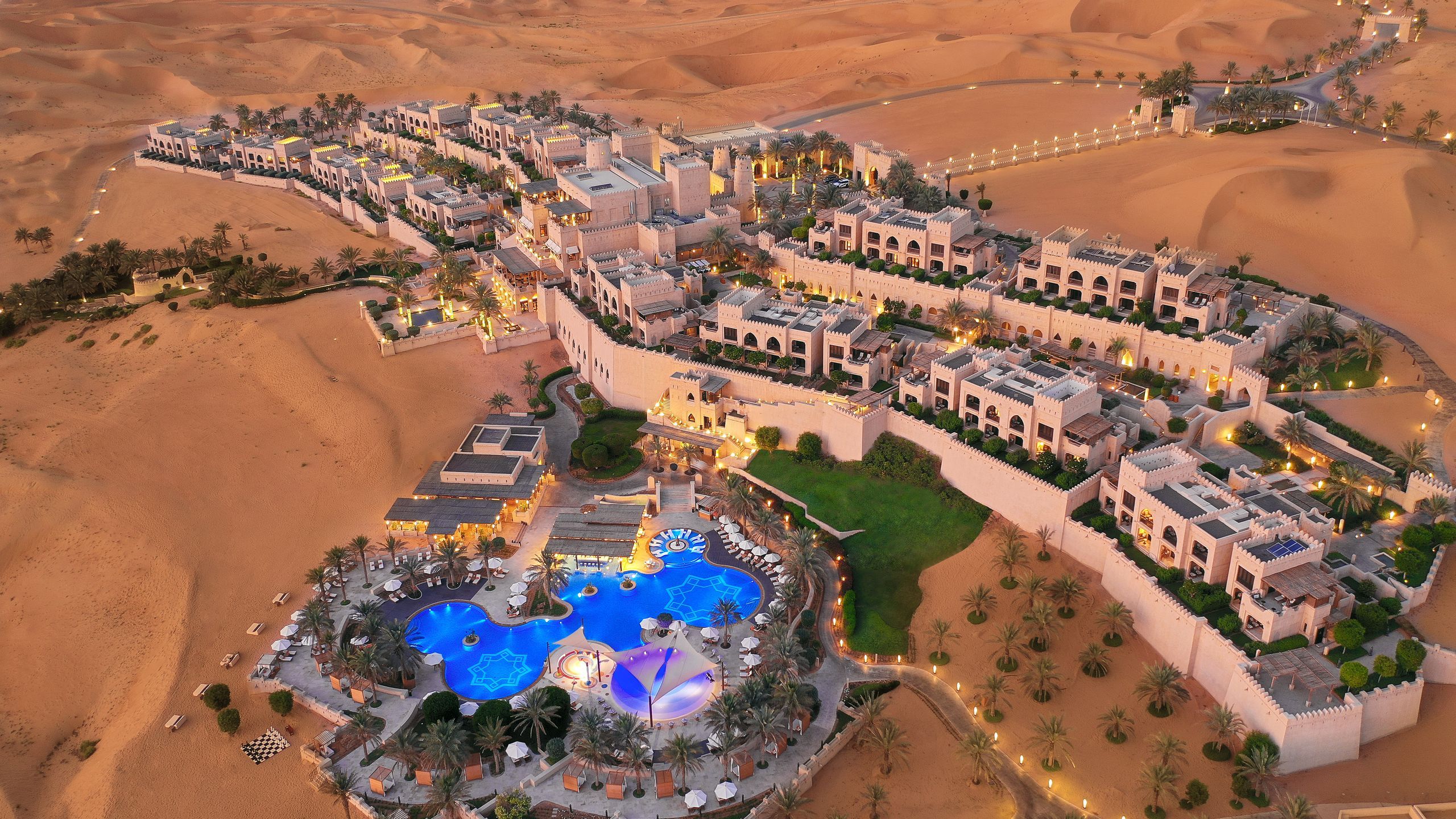
Anantara Qasr Al Sarab — A mirage palace in the Empty Quarter
Anantara Qasr Al Sarab is the most dramatic desert hotel in the Middle East — a fortress palace rising from the dunes of the Empty Quarter, the world's largest continuous sand desert.
The Rub' al Khali — the Empty Quarter — is the world's largest continuous sand desert: 650,000 square kilometres of dunes that stretch across Saudi Arabia, Oman, Yemen, and the UAE. Anantara Qasr Al Sarab rises from the edge of this extraordinary landscape like a mirage: a fortress palace of ochre walls and wind towers that references the traditional architecture of the Arabian Peninsula while delivering every modern luxury. The hotel's 206 rooms and villas, the multiple pools, the desert spa, and the extraordinary range of desert activities — dune bashing, camel trekking, falconry, and stargazing — make it the most complete desert resort in the Middle East. The views from the dune crests at sunset are among the most spectacular on earth.
Powered by Booking.com
Our verdict
The world's best desert hotels have transformed the experience of extreme landscape from an endurance test into a form of luxury that has no equivalent elsewhere. The silence, the space, and the elemental beauty of the desert — experienced from the comfort of a perfectly designed room — create a form of restoration that urban hotels cannot provide. Whether you choose the architectural perfection of Amangiri, the eco-vision of AZULIK AlUla, or the Moroccan refinement of Be Agafay, a stay in a great desert hotel will recalibrate your sense of what matters.
Our editors travel extensively to verify every recommendation. All hotel reviews are independent — we accept no payment for editorial coverage.